

INTEGRATED MANAGEMENT OF LAND BASED ACTIVITIES
IN THE SÃO FRANCISCO RIVER BASIN PROJECT
GEF/ANA/OAS/UNEP
Activity 3.3A Citizen Training for the Management of
Basin Committees and Environmental Education
Executive Summary of the Final Report
PARTICIPATIVE MANAGEMENT OF WATER
RESOURCES IN THE STATE OF PERNAMBUCO: THE
JAZIGO RESERVOIR AND THE PONTAL CREEK
PERENNATION SYSTEM EXPERIENCES
Governo de Pernambuco
Secretaria de Recursos Hídricos
Recife - PE
INTEGRATED MANAGEMENT OF LAND BASED ACTIVITIES
IN THE SÃO FRANCISCO RIVER BASIN PROJECT
GEF/ANA/OAS/UNEP
Activity 3.3A Citizen Training for the Management of
Basin Committees and Environmental Education
Executive Summary of the Final Report
PARTICIPATIVE MANAGEMENT OF WATER
RESOURCES IN THE STATE OF PERNAMBUCO: THE
JAZIGO RESERVOIR AND THE PONTAL CREEK
PERENNATION SYSTEM EXPERIENCES
Coordinator
Paulo Roberto Jurema de Dutra
Secretaria de Recursos Hídricos do Estado de Pernambuco
Consultant
Marisa Simões Lapenda Figueiroa
Contract CPR/OEA PO # 41298
December 2002
PARTICIPATIVE MANAGEMENT OF WATER RESOURCES
IN THE STATE OF PERNAMBUCO: THE JAZIGO RESERVOIR AND
THE PONTAL CREEK PERENNATION SYSTEM EXPERIENCES
EXECUTIVE SUMMARY
INTRODUCTION
Registration of experiences in supporting water users' organizations in sub-basins of the São
Francisco River is the object of this work. Those experiences took place in the context of the
Integrated Management of Land Based Activities in the São Francisco River Basin Project
(GEF/ANA/OAS/UNEP), the GEF São Francisco Project.
The Project is implemented by the National Water Agency (ANA), of Brazil, and by the
Organization of American States (OAS), at national and international levels, respectively. It is
implemented by the United Nations Environment Programme, with support of the Global
Environment Facility (GEF). The Secretariat of Water Resources of the State of Pernambuco
(SRH-PE) is responsible for the coordination of Activity 3.3.A (Citizen Training for the
Management of Basin Committees and Environmental Education), part of Component II
(Sustainable Development and Stakeholders Participation) of the São Francisco Project.
Two experiences, regarding the creation of Water Users Councils, were supervised in the context
of Activity 3.3.A. The first one in the Jazigo Reservoir, in the Pajeú River Basin (Municipality of
Serra Talhada) and the other in the Pontal Creek Perennation System, in the Pontal River Basin
(Municipality of Petrolina).
The present work presents the consolidation of four thematic reports on the re-structuring of the
Water Users Council of the Jazigo Reservoir, on the creation of the Council for the Pontal Creek
Perennation System, on capacitation events and on cadastration of water users in both areas.
The report is presented in eight chapters. The first three refer to the theoretical-methodological
basis for the intervention. The next three, of a more specific content, focus on the experiences in
the implementation of the programmed activities. Finally, there are conclusions and
recommendations that might be considered for replicating the experience in the creation of
councils or strengthening existing associations. For the latter, cost estimates for the necessary
interventions are presented.
1. BASIC
CONCEPTS
The theoretical-methodological orientation for management of micro-basins rests on the concepts
which guide the shared management of the water. Among those, stand out those regarding
sustainable development, water resources integrated management, community participation and
social mobilization.
1.1 SUSTAINABLE
DEVELOPMENT
Water resources management is strongly linked to sustainable development and environmental
management policies. The Global Environment Commission's definition of sustainable
i
development ("a process that meets current needs, without compromising the possibility of future
generations meeting their own needs") was taken as a starting point.
It is understood that the main objective of sustainable development is to improve peoples' life
quality and reduce social differences, through a re-orientation of the traditional economic
development model. Dynamic economics is a prerequisite to reach those objectives. Social equity
and environmental preservation are necessary conditions to ensure them in a sustainable and
continuous way, in time and space.
The search for a new orientation for development requires great organization efforts and
negotiation among social actors. It requires, additionally, an ethical compromise with future
generations. Thus, it is important to consider water management strategies in the sustainable
development policies, whose economic, social and ecological dimensions must be treated in an
integrated manner, in the search for the desired results.
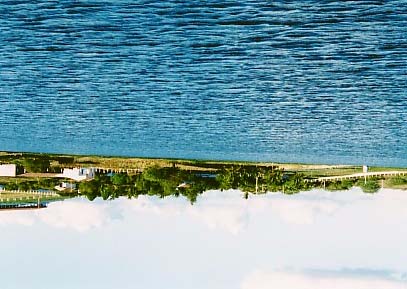
Picture 1. Partial view of the Jazigo Reservoir.
1.2 INTEGRATED WATER RESOURCES MANAGEMENT
Integrated water resources management means "the set of actions viewing the multiple and
rational utilization of the water resources, satisfactorily fulfilling all uses and users, in quantity
and quality standards, as well as the control, conservation, protection and recovery of those
resources, with equitable distribution of the costs among users and beneficiaries.
Among the key elements configuring the integrated water resources management stand out the
holistic approach with participative and technically supported decisions, the adequacy of water
use and environmental preservation rational technologies, as well as the constitution of
appropriate funds to support investments and activities.
ii
The integrated water resources management is a process whose objectives are the well-being of
the people and the sustainability of vital ecosystems. It must be implemented with social
participation, using river basins as the spatial unit for their operation, as schematically
represented in Figure 1.
Figure 1. Base for actions, objectives and dimensions of the integrated water
resources management process
1.3 COMMUNITY
PARTICIPATION
The Federal Law that instituted The National Water Resources Policy in Brazil states, in its first
chapter, that "water resources management must be decentralized and rely on the participation of
the Public Powers, of the users and of the community". It further defines the instances for
exercising these participations: The National Water Resources Council and the River Basin
Committees.
Participating in this management, however, is a process which involves building roads for the
change and not just an exercise for discussing public policies. It is an act of choice which
assumes a conviction and will to build a project of future, based on sustainability principles:
political democracy, social equity, economic efficiency and environmental preservation.
Articulation and partnership between the public power and organizations of the community are
indispensable conditions for this to happen. The first must give special attention to the decision
processes, at all levels, providing support for the institutional strengthening of the users'
organizations and for the investment in development and transference of knowledge and
technologies aimed at a better use and conservation of the waters.
The institutions representing the diverse social actors (users, teaching/research institutions and
technical associations) play a decisive role in the identification of problems and on the decisions
regarding what to do, how to do and which funds to use.
It is preserved to the Public Powers the sovereignty and legitimacy of the decisions as well as the
responsibility over administration of the public programs, either by direct execution, or by
iii
granting authorization to third parties. Additionally, it is the responsibility of the Government the
long range planning.
1.4 MOBILIZATION OF THE COMMUNITY
A social mobilization process begins when a group or an institution, viewing changes in a given
situation, convokes people to know, evaluate and discuss a proposal for change, and Express their
opinion.
The success of the initiative depends on the purpose of the mobilization and on the way the
message is passed on. Under this light, it is important the formulation of social mobilization
strategies viewing encouragement of the users for the construction of a pact preservation of the
water resources.
The integrated management of the water presumes a movement for re-organizing relationships
among social actors, and between those and the public powers. This implies with breaking up
with the idea that water is an everlasting gift of nature, available for indiscipline use. In this
sense, it is fundamental that the proposal for mobilization include objectives and goals to which
the society is willing to compromise with.
The Public Power is the agent for carrying out this process, especially with respect to the
capacitation and assurance of space for the poorer social groups, with lower level of access to the
conventional means of communications. The water users are indispensable partners.
The mobilization of social actors for the management of the waters is based on four axes, with
standards and objectives ranging from the conceptual to the operational plans, with a structure
similar to the represented in Figure 2.
AXIS
OBJECTIVE
EXPECTED
REFERENCE
RESULT
Better quality of life for
CONCEPTUAL
Environment
Assuring an adequate
present and future
environment for life
generations
THEMATIC
Water (public good
Inducing awareness for
Multiple and rational use
with economic value)
the adequate use of water
of the water
STRATEGIC
Social participation
Aggregating people
Ecologically driven social
(value)
around a common cause
behavior
OPERATIONAL
Enforcing social
Creating management
Integrated management
mobilization
institutions
system implemented
Figure 2 . Achievements of the social mobilization.
iv
1.5 FOCUS ON GENDER IN THE MANAGEMENT OF WATER RESOURCES
Women play a fundamental role in the utilization and preservation of the water resources. Their
tasks in collecting and protecting the water for domestic use and, in many cases, for agricultural
purposes, are vastly recognized.
Besides, when there is insufficiency in the water supply or in its delivery, they are the most
severely penalized, as they must pick it up in far away wells, to face the domestic needs. But it is
also important to emphasize their role in the education of the children and youth, contributing to
the formation of a new consciousness on the relations with nature.
Nevertheless, historically, women have played roles of a lesser importance than those of men, in
the evaluation of problems and on the decision making. There are, evidently, efforts to be made
to assure an equitable participation of men and women, in the management of the water. This
means that the gender factor must be considered as basic for the practice of a good management.
According to this point of view, the gender must be taken into account, to identify the
possibilities to overcome the hierarchization and differences in values and responsibilities
assumed by men and women.
2.
INSTRUMENTS FOR WATER RESOURCES MANAGEMENT
2.1 JURIDICAL-ADMINISTRATIVE, FINANCIAL-ECONOMIC AND POLITICAL-
INSTITUTIONAL INSTRUMENTS
The main instruments for the management of water resources are defined in the legislation
regarding water policies: The Law 9,433/97, at the federal level, and Law 11,426/97, in the State
of Pernambuco, must be characterized as having juridical-administrative, financial-economic and
political-institutional aspects.
The juridical-administrative instruments are the water resources plans, the information systems,
the concession of water rights and the classification of water bodies according to the predominant
type of use. They are useful for guiding the planning and interventions based on information, and
to encourage and regulate the rational use of the resource.
The financial-economic tools are meant to regulate the use of the water as a good of public
domain with an associated economic value. They are helpful in obtaining the necessary funds for
projects and activities focused on the warranty of a better use and preservation of the water.
The political institutional instruments correspond to the collegiate instances of the Water
Resources Integrated Management System: The Water Resources National and State Councils
and the River Basin Committees. The first ones have normative and deliberative functions within
their jurisdiction: The Country and the State, respectively. The River Basin Committees are
responsible for the definition of strategies and lines of action, as well as for the monitoring of
management activities within the respective basins.
The participative and decentralized management occurs when decisions are taken in a collegiate
instance and are fit to the particularities and forms of local political and associative organization.
Additionally, the planning, negotiation and control instruments defined in the legislation must be
effectively used.
v
2.2 COLLEGIATE
INSTANCES
The collegiate instances are the primary forum for exercise of the participative and integrated
management of the water resources, putting together representatives of the public powers, water
users and the civil society. The federal legislation establishes two levels of collegiate instances:
The National Water Resources Council and the River basin Committees.
In Pernambuco, besides the State Water Resources Council and the River Basin Committees, the
Law defines the State Water Resources Committee, constituted by representatives of public
planning, environmental and management agencies. Besides providing technical support to the
State Council, it is the agent responsible for the institution of the Basin Committees. However,
the Committee, which was defined by Law 11,426/97, of the State of Pernambuco has not been
implemented so far.
The National and the State Councils have normative and deliberative roles, in maters related to
the formulation and monitoring of the Water Resources Policy, at federal and State levels,
respectively. They are in charge of the implementation of the policies.
The River Basin Committees are organized in a way to assist the diverse water users in a given
basin. They represent the negotiation forum for the users and for the definition of priorities for
allocating funds viewing the water management.
2.3 MANAGEMENT OF THE WATER RESOURCES AND LOCAL DEVELOPMENT
Water resources management in a given basin must follow the Water Resources Director Plan,
elaborated in compliance with the State's Water Plan. Nevertheless, it is worth acknowledging
the competence of the Municipality to create laws regarding matters of local interest, as defined
in the Brazilian Constitution, including those related to the use of the water.
The sanitation systems, including treatment and distribution of water for domestic use, the
sewerage systems, including collection, treatment and disposal of residual solids, and urban
drainage systems, all affecting water quality, are under the operational and spatial jurisdiction of
the Municipality. Planning and control of the soil use, critical for the protection of the natural
resources, are also responsibility of the Municipalities. Therefore, the municipal development
plans must be taken into account, or their formulation encouraged, whenever they do not exist.
3.
PARTICIPATIVE WATER RESOURCES MANAGEMENT IN PERNAMBUCO
3.1 THE STATE WATER RESOURCES MANAGEMENT SYSTEM
In Pernambuco, the Water Resources Integrated Management System was created by Laws nr.
11,426 (which also defines the State Policy and the Water Resources Plan of the State) and by
Law 11,427 9 (regarding groundwater protection and preservation), under the coordination of the
Water Resources Secretariat (SRH-PE). The System covers the collegiate instances, the
implementing institution and those referred to as executing agencies, as displayed in Chart 1.
vi
Chart 1. The Water Resources Integrated Management System of Pernambuco:
Participating institutions, character and main attributions, according to Law
11,426/97.
Institution Nature
Main
attributions
Water
Instance for superior
Approving of the Water Resources State
Resources
deliberations on the
Plan; exerting normative and deliberative
State
State's management
roles in the implementation of the State's
Council
system
policies; defining guidelines for the use of
public funds in the sector.
Water
Technical support to
Instituting the Basin Committees; giving
Resources
the Council and
opinions on the classification of water
State
deliberative instance
bodies; signing contracts and agreements,
instances
Committee
for the River Basin
verdicts and technical papers; approving
Committees.
plans for the basins.
River Basin
Instance for
Approving plans and investment programs
Committees
consultancy and
for the river basins; evaluating and
deliberation, on a
approving proposals for the use and
Collegiate
regional level.
preservation of the water resources;
encouraging the creation of associations
and consortia; enforcing the charge for the
use of water, through delegation of
authority.
Water
Planning and
Providing technical and operational support
Resources
management of the
to the State Council; officially representing
Secretariat
System
the Water Resources Integrated Management
g Agency SRH
System; coordinating and monitoring water
Implementin
resources management within the State.
Public
Water resources
Making interventions; participating in the
administration planning and
planning and monitoring of activities in their
sectors in the
executing agencies
area; observing the National and State norms
Executing
agencies field of water
of the respective Councils.
resources
3.2 COMPOSITION AND ATTRIBUTIONS OF THE COLLEGIATE INSTANCES
The conception of the Water Resources Integrated Management System, in the State of
Pernambuco, is in compliance with parameters established in the National Policy. A few points,
however, are in clear contradiction with the Federal Law, with respect to the characterization of
the collegiate instances in the management of the waters.
Among those, stand out the nature and composition of the River Basin Committee, treated
sometimes as "local technical support collegiate instances, operating in the hydrographic units
nominated by the Water Resources State Plan", sometimes as "consultancy and deliberative
vii
collegiate instances at regional levels". These distinct treatments are defined in Articles 29 and
28, respectively, of Law 11,426/97.
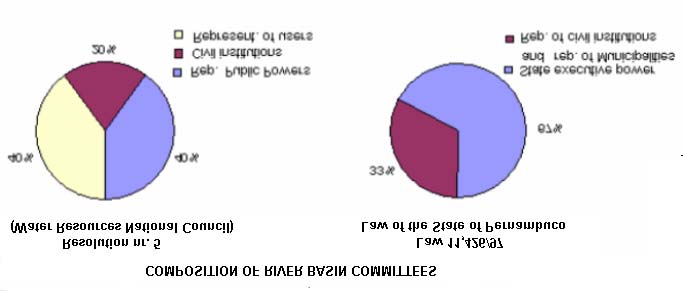
The federal law limits in 50% the participation of representatives of the executive powers of the
Union, States and Municipalities, in the total seats of the Committees. Resolution number 5, of
the Water Resources National Council, of April 10th of 2000, went further in the definition of
profiles of the Committees, setting in 40% the total of votes of representatives of the public
powers, in 20% for representatives of civil institutions and in 40% for user's representatives.
The Pernambucan Law limits in one third of the total of Committee members the number of
representatives of the civil society. It should be further noticed that, according to Law 11,426/97,
Art. 23, the third of the collegiate reserved for the civil society must accommodate: "(a)
universities, graduate schools and technological development and research institutions; (b) water
users, represented by community associations, cooperatives or enterprises; and (c) associations
with expertise in water resources, environmental institutions and non-governmental
organizations". The difference between the Federal and State Laws is presented in Figure 3.
Figure 3. Comparison of compositions of River Basin Committees, according to the
Water Resources National Council and to the State of Pernambuco.
Among the 19 members with rights to vote in the Water Resources State Council, nine are
reserved for representatives of the State's executive powers, seven for members indicated by
Municipal Prefectures, one for the State's House of Representatives and only two of the civil
society. Among the latter, one is a representative of enterprises and one of technical institutions.
There are no seats for workers or for the community. The Council's composition is shown in
Figure 4.
Those issues, however, must not be considered as obstacles to the participative management
process, as the Federal Law prevails and because participative management is validated by its
enforcement. Nevertheless, they must be object of reflection, viewing the improvement of the
system.
viii
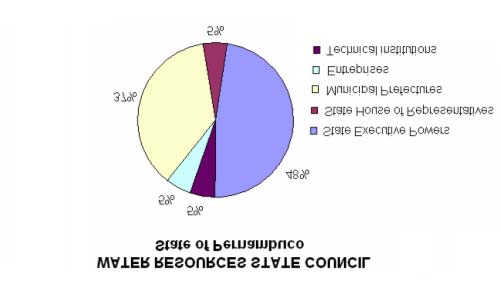
Figure 4. Composition of the Water Resources Council of
Pernambuco, in compliance with Law 11, 426/97.
3.3 THE PARTICIPATIVE MANAGEMENT PROGRAM IN PERNAMBUCO
The participative water resources management program was implemented in Pernambuco in July
of 1997. The acknowledgement of experiences related to mobilization and organization of users
in other States of the Country was the starting point for the design of the work methodology. The
experience of the State of Ceará, chose to start mobilization focusing smaller physical units,
closer to routine activities of the users, the reservoirs, and augmented its area of operation
towards more complex units, until reaching the river basin. This model was taken as reference for
Pernambuco.
Two lines of work were implemented. In the Forest Zone, efforts were concentrated in the
constitution of a pilot basin committee that could be transposed to other regions in the State. In
the Agreste (arid zone) and in the Sertão (hinterland) regions, emphasis was given to the
constitution of reservoir users' councils, beginning in areas which already had a demand of
support from the water resources regulating agencies, in the mediation of conflicts in the use of
water, scarce, given the droughts.
Some concomitant factors contributed positively to boost the program in its initial stages. Among
those it might be mentioned the elaboration of the State's Water Resources Plan, which favored
discussions and integration of the technical teams, the elaboration of director plans for the basins
of tributaries of the São Francisco River, sponsored by the Government.
3.4 RIVER BASIN COMMITTEES
Between 1998 and 2000, River Basin Committees were installed in 6 Basins, covering 90 of the
184 Municipalities in the State of Pernambuco.
The Committee of the Pirapama, the first to be installed, in 1998, is located in one of the 14
Basins in the coastal zone, predominantly in the Recife Metropolitan Area, with significant
ix
urban, agricultural and industrial occupations. The installation followed a series of technical
studies, in the context of the Pirapama Project, initiated in April of 1997, coordinated by
Environmental Agency of Pernambuco, with support from the British Government. The
mobilization viewing the formation of the Committee allowed the evaluation of the used
methodology, which was adjusted and used as reference for other areas.
The elaboration of the director plans was an element of motivation for aggregating the
municipalities and communities of the respective basins, viewing the formation of the
Committees of the Pajeu, installed in 1998, and of the Moxoto, in the following year. The
Mundaú and the Ipojuca Committees went through a more intense mobilization, resulting from
the evaluation of the first two, even though both of them had the same motivation element, the
elaboration of the Director Plan for the Basin. The first one was implemented in July of 2001 and
the second in May of 2002.
The Jaboatão Committee covers six Municipalities and its most important area is located in the
Recife Metropolitan Area. The creation of the Committee was originated from the worries of an
environmentalist group focused on environmental issues concerning the Jaboatão River, aiming
at the improvement of water quality, affected by pollution. The Committee was installed in
March of 2001.
3.5 USERS' COUNCILS
Users' Councils are collegiate units working within the area of influence of micro-basins or
reservoirs, around which they are organized. Similar to users' association, they are formed as
private institutions, serving the interests of local communities. However, they have different
compositions. While associations group individuals by activities or fields of interest, the councils
are formed by representatives, indicated by public institutions and associative entities.
With composition similar to the Committees, observing a proportional scale of operation, in
Pernambuco, the Councils are focused on the management of reservoirs, being enacted by the
Secretariat of Water Resources to deal with matters in their area of influence. The operating
Councils are all located in the semi-arid part of the State (six in the Agreste and one in the
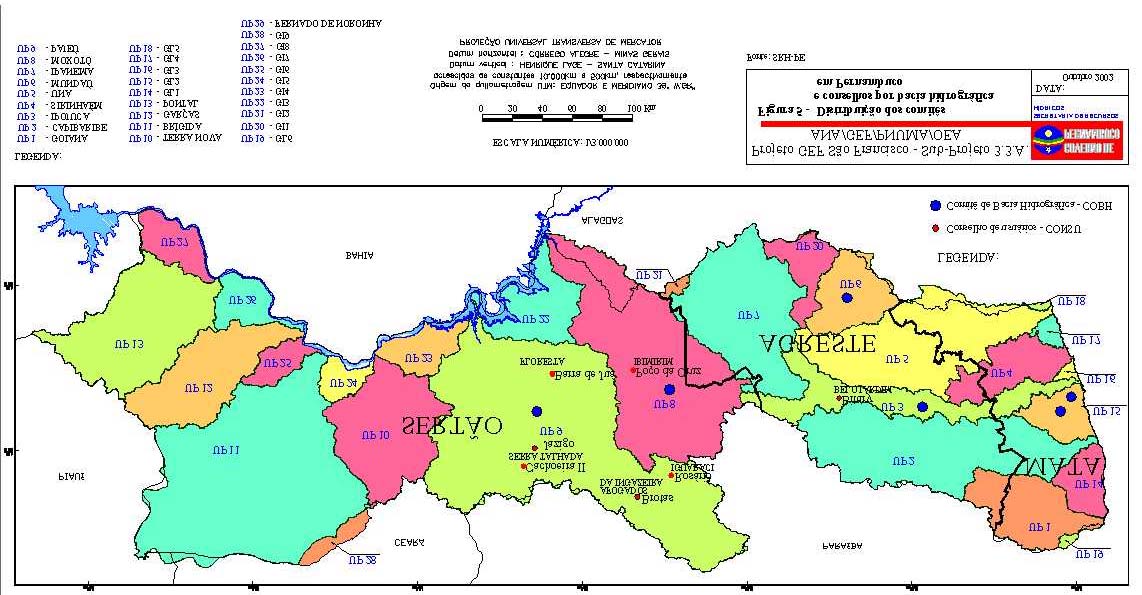
Sertão). Figure 5 presents the distribution of the existing Committees and Councils, by Basin, in
the State of Pernambuco.
Experience has shown that these units are effective in the solution of conflicts in the use of the
water and in the operation of reservoirs. Additionally, they can work permanently as permanent
offices, viewing the strengthening of community organizations and of the River Basin
Committee.
x
xi
Figure 5. Distribution of Committees and User's Councils, by Basin.
4. EXPERIENCES IN THE ORGANIZATION OF USERS IN THE MICRO-BASINS
OF THE PONTAL RESERVOIR AND IN THE PONTAL CREEK PERENNATION
SYSTEM.
The reservoirs formed by the damming of the rivers are used as water supply for the routine
activities of the surrounding populations, therefore representing concrete references for the
strengthening of the participative management of the resource.
Such evidence justify the selection of two associations for close observation, and registration of
all undergone processes and obtained results, in a way to use them as reference for similar
experiences. The Users' Councils of the Jazigo Reservoir and of the Pontal Creek Perennation
System were selected.
Inn the first case, it consisted of re-structuring an already existing council, with operational
problems. In the second, support was provided for the creation of an organization to represent the
users of a perennated system, putting together in a sole forum the various associations of small
farmers, with focus on the use of water for agriculture and livestock raising activities.
4.1 THE JAZIGO RESERVOIR
The Jazigo Reservoir is located in the Pajeú River basin, in the Municipality of Serra Talhada, in
the Sertão of Pernambuco. It was built to operate jointly with other successive dams, aiming at
the perennation of a reach of the River.
However, the water stored in the reservoir upstream from Jazigo is being used for the urban
supply of Municipality of Afogados da Ingazeira. In consequence, the reservoir is restricted to it
own area of contribution, operating at low levels of water in the dry months.
xii
x
iii
Figure 6. Location of the Jazigo Reservoir, in the Pajeú River Basin.
The technical file of the Jazigo Dam presents the following characteristics:
· Location (Pajeú River Basin): 7º 9'56" S and 8º14'30''W coordinates
· Operator: Pernambuco State Government
· Year of inauguration: 1983
· Predominant use of the water: Irrigation
· Area of Basin: 6,170 km²
· Storage capacity: 15,54 x 10⁶ m3
The land along the river, upstream from the reservoir, is occupied by rural properties ranging
from 5 to 20 ha, with activities related to subsistence agriculture and raising of small animals.
Given the scarcity of water, in most part of the year, and the distance from the point of water
intake to the plantations, irrigation is made mostly with water pumped from wells dug in the bed
of the Pajeú, or from Amazon wells.
The properties adjacent to the reservoir have a tendency to be used for recreational purposes,
hosting groves or clubs frequented by those living in the town. The area also has family and
enterprise operated farms that use water taken directly from the lake, for irrigation and livestock
consumption. The latter use the land for pasture and irrigate fruitculture.
The strip along the Pajeú River, upstream from the reservoir, is occupied by properties with areas
of 20 or more hectares (some of them over 100 ha). In general, they have a rectangular shaped,
with one of the sides bounded by the river. Here, predominate the syndicated livestock raising
producers, mainly in the dairy production sector. These properties endure greater difficulties with
the water supply from the Pajeú River, as it does not offer a regulated flow. As a consequence, no
producer can plan his activities based on water from the reservoir.
4.2 THE PONTAL CREEK PERENNATION SYSTEM
The Pontal Creek Perennation System is inserted in the Pontal Creek Basin, in the Municipality
of Petrolina, as shown in Figure 7.
xiv
xv
Figure 7. Location of the Pontal Creek Perennation System.
i
Petrolina is a pole of the Mesoregion of the São Francisco, thanks to the development of agro-
industries and of irrigated fruitculture. The most dynamic economy is, however, restricted to the
urban center and to the irrigation districts, close to the River. The other areas in the Municipality
suffer, as in the remaining semi-arid regions, the adverse effects of the insufficient rainfalls and
the severe difficulties for developing productive activities.
In 1970, the Government of Pernambuco designed a perennation system for watersheds in the
semi-arid, composed of main reservoirs, called the mother-reservoirs, and several regulating
dams along the river. Two dams, the Vira Beiju, with an 11.8 million m3 storage capacity, and the
Cruz de Salinas, with a 4 million m3 capacity, were built in the Pontal Basin, besides other dams
in the Icozeiro and Simão tributaries.
The perennation system did not work as expected, given the low runoff capacity of the Pontal
River Basin. In the past 10 years, the Basin produced expressive amount of water only in January
of 2002.The small farmers in the area to be benefited never fulfilled their expectations of using
water from the system to guarantee their productive activities.
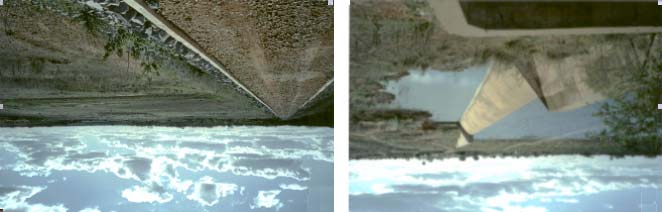
Picture 2. Views of the motherreservoirs of Vira Beiju (to the left), completely empty, and
Cruz de Salinas (right).
In the 90's, the Senator Nilo Coelho Irrigation Project, which takes water from the São Francisco
River, was augmented and received an additional area denominated Maria Tereza Irrigation
Project, which extends to the adjacencies of the Pontal System. The farmers saw then the
possibility of obtaining small allocations of water from the canal serving that Project, to feed the
Icozeiro and Simão Creeks, both tributaries to the Pontal.
Until now, these diversions constituted a merely emergency situation. Discharges in the final
reach of the canal are insufficient to meet the irrigation demands of the Maria Tereza Project in
addition to the needs of the Pontal System. Small volumes of water are provided, when available.
Besides, there existed no agreement between the Project's operators and the users in the Pontal,
regarding a firm supply.
In face of the conflict, CODEVASF (Company for the Development of the São Francisco and of
the Parnaíba River Valleys) agreed to investigate alternatives for solving the supply problem, in a
xvi
way to help all farmers depending on the perennation system. This made necessary the
organization of the farmers, to legitimately represent them in the matters to be discussed.
4.3 CAPACITATION OF USERS
In the stage of mobilization for the creation of the Users' Councils, there were training events
planned based on the fact that integrated management of the water resources requires more than
will and interest in participating. It requires a change in behavior, incorporation of values and
instrumentation, to deal with the necessary information for guiding the planning and control of
the use of the water.
The programmed events for the members of the User's Councils of the Jazigo and the Pontal
viewed a contribution to their strengthening, supported by a better understanding of the
importance of social participation and of the proper operation of the Reservoir and of the
Perennation System. In the workshops, besides the participative techniques to help in the
multiplication of the taught matters, there were practical activities, during field visits.
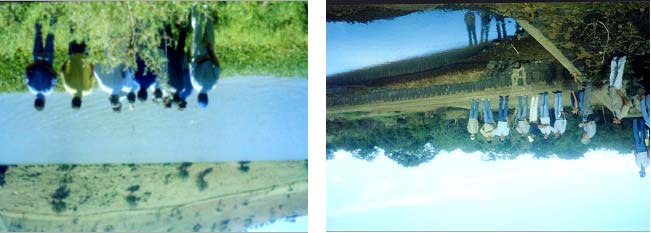
Picture 3. Field classes at the margins of the Jazigo Reservoir (left) and at the Jatobá Dam.
The workshops, meant for 30 persons, followed activities viewing the involvement and
motivation among the users. In the occasion, the criteria for selecting the participants and the
periods of training, convenient for all candidates, were agreed upon. The training content
emphasized the relationship between natural resources and environmental preservation, the basics
of the hydrological cycle, preservation of springs, and reservoir operation, in addition to the
importance, role and functions of users' councils.
Evaluation of the workshops, performed by the participants themselves, in both trainings, showed
that the activities contributed to the motivation and encouragement of those involved, for taking
part in themes related to water management in their communities.
xvii
4.4 CADASTRATION OF USERS
Management of the micro-basins under study, subject to long periods of water deficits, is
extremely dependent on information on both water availability, variable along the year and from
year to year, and on users' demands, their relation being fundamental for the efficient and
negotiated allocation of water.
Thus, cadastration of users in the areas of influence of the Jazigo and of the Pontal aimed at a
greater understanding of users' profiles and of local demand/use of the soil and water. Chart 2
summarizes the main items in the cadastration.
Chart 2. Main data obtained in the cadastration and used for creating the database of the
systems under study.
Pontal Creek
Classification of data
Jazigo Reservoir
Perennation
System
· Number of registered users
88 users
80 users
- men
97.7%
81.2%
- women
2.3%
18.5%
· Users' degree of education
- illiterate
22.7%
39.2%
- attending jr.-high school
37.5%
40.5%
- junior-high school graduate
2.3%
7.5%
- senior-high school graduate
10.2%
7.6%
- college graduate
18.8%
5.1%
· Predominant form of settlement
- landowner
92.0%
90.0%
· Predominant form of water intake
- deep
wells
21.6%
7.5%
- Amazon
wells
27.3%
21.25%
- wells on bedstream (cacimbas)
11.4%
28.75%
- dams
2.3%
7.5%
· Predominant use of the water
- irrigation
85.2%
45.0%
- human
supply
69.3%
5.0%
- livestock
consumption
73.8%
8.7%
- industry
4.5%
0
- pisciculture
5.6%
0
· Participation in associative organizations
- farmers'
associations
2.3%
70.0%
- councils
5.7%
3.8%
- syndicates
19.3%
11.2%
- cooperatives
4.5%
3.8%
- do not participate
80.7%
15.0%
· Knowledge of water policies
- heard about the Water law
50.0%
51.0%
- know about local Users' Council
40.9%
Do not apply
xviii
5.
USERS' COUNCIL OF THE JAZIGO RESERVOIR
O User's Council of the Jazigo Reservoir, the CONSU-Jazigo, was founded in August of 2001, to
provide the users with a forum of discussion and search of solutions for the conflicts in the use of
water, between upstream and downstream users.
The first ones wanted the hydraulic gates of the dam closed, to retain enough water to meet their
demands. They questioned that opening the gates would reduce the surface of the lake, thus
increasing the distance between the intake and their properties. The downstream ones complained
that without water they could not run their agricultural activities. A year after the creation of the
Council, conflicts still persisted, aggravated by new issues, motivated by the lack of integration
among the participants.
The process of re-structuring the CONSU-Jazigo was initiated in May of 2002, with support from
the GEF São Francisco Project (ANA/OAS/GEF/UNEP). A visit to area was programmed, for
discussion of a re-structuring proposal, with the participation of users and council members.
More than just making adjustments, the aim was in re-designing the Council, so that it would
fulfill its role of collegiate instance focused on the integrated management of the water resources.
During the interviews with the users and meetings with Council heads, it was made clear that the
lack of articulation among Council members was the factor determining the poor performance of
the CONSU. The majority of the users pointed out that they didn't even know who were the
representatives of the upstream and downstream groups.
With respect to the demand of water, object of the conflict among users, it was verified, from the
cadastration data, the great divergence between the availability of water in the reservoir and the
expectative of the users.
According to studies by the SRH-PE, water availability in the reservoir allows the utilization of
800 l/s, during four to five months in the year. In the other months, it is not possible to obtain
more than 200 l/s, without incurring in the risk of emptying the reservoir. Considering the
relation of 1 l/s for each irrigated hectare, it was verified an expectative of water use eight times
greater than the capacity of the reservoir, for irrigation alone. The declared irrigated area (329 ha)
already is one and a half times greater than the reservoir capacity to meet the demands, in seven
to eight months of the year.
Besides, irrigation is not the unique use for the water, as only 10.2% of the users indicated it as
an exclusive use. Other utilizations include human supply, livestock consumption, three
industries and 5 fish farms.
Analysis of the data allowed the users a direct contact with situation and difficulties
characterizing the operation of reservoirs. It was evident that the lake formed by the dam favors
the upstream users, a fact that emphasizes the need of negotiations for an equitable allocation of
water. The creation of two commissions was the way found to facilitate the articulation among
users and avoiding the common disagreements between upstream and downstream groups. Each
group was made responsible for the organization and notification of the meetings in their
respective areas.
As the Social Statute was not yet registered in a public notary, the Executive Directory decided to
re-evaluate the document, to adjust it to the new structure under discussion. This re-evaluation
xix
aimed at correcting deficiencies and assuring the inclusion of representatives of the Public
powers and of the civil society in the deliberating council of the organization.
5.1 VALIDATING
RESULTS
The heads of the CONSU-Jazigo requested from the Water Resources Secretariat (SRH-PE)
information on water availability in the reservoir, to support the negotiations regarding the
releases of water for downstream users.
The SRH-PE carried out and presented the simulation of the reservoir operation based on two
scenarios, considering data from the 1983-2000 period. The first one considered only evaporation
as the water output from the reservoir. In the second, the withdrawals for the common uses in the
Basin were added. Conclusion indicated that new scenarios must be made, monthly, for
simulation of the possible withdrawals, considering water availability.
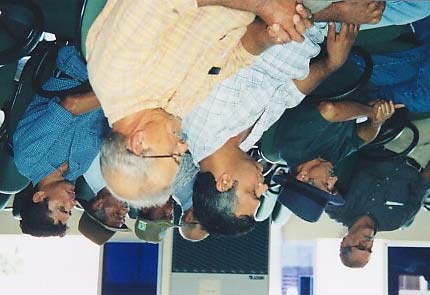
Picture 4. Presentation on water availability in the Jazigo
Reservoir, for group of water users (June/2002)
Another fact deserving mention was the active participation of representatives of the Users'
Council in the Regional Meeting for Installation of the São Francisco River basin Committee, in
Serra Talhada, on the 11th of June of 2002.
It is also worth of notice the appeal to the SRH-PE, sent by the President and by the 1st Secretary
of the CONSU-Jazigo, in December of 2002, which included the following lines:
"After a meeting of our CONSU-Jazigo, we unanimously agreed to forward this to you, so
that this Directory will make a survey of the downstream area, right and left margins, of
the Jazigo Reservoir. This way, we would acknowledge the budget for building pipelines on
xx
the mentioned margins. We justify the feasibility of installing the pipelines along the
margins with the great savings in water for supplying existing downstream irrigations, as,
currently, conveyance in the natural channel of the Pajeú River implies in great water
losses to infiltration and evaporation".
The mentions to "our CONSU-Jazigo" and to "unanimously agreed", for example, indicate that
the institution is already being considered a common forum where agreement is searched for. The
purpose of the appeal reveals the concern with saving water, to serve a greater number of users.
Allusion to the cost of the works is also significative, as the council members are not just
requesting an intervention with public funds, but also want to "acknowledge the budget"
necessary for its implementation.
The activities carried out for the re-structuring of the CONSU-Jazigo indicate that the
sustainability of the Council demands a continuity of the technical support, until it is able to walk
alone. The provision of technical information on the reservoir and on its operation, the promotion
of capacitation events and the creation of an executive office for the Council are especially
recommended.
6.
THE USERS' COUNCIL OF THE PONTAL CREEK PERENNATION SYSTEM
6.1 REQUESTS OF RIPARIAN COMMUNITIES
In view of the failure of the Perennation System, which did not work as designed, the farmers
looked for a way to assure an activity for the working hands and proper conditions for
agricultural production. They decided to organize themselves and request from the Public Powers
a regular supply of water for irrigating their small plots along the margins of the Pontal Creek.
Given the arguments that using the infrastructure of the already built overflow dams would
improve the working conditions of the local communities, the CODEVASF looked for
alternatives to solve the problem. In the mean time, the System would continue to receive small
allocations of water, if there were a surplus in the irrigation Project.
6.2 STUDIES UNDERTAKEN BY CODEVASF
In November of 1999, a commission, nominated by CODEVASF, prepared a report on the
situation in the Pontal Creek Perennation System. Among the main recommendations, it was
suggested a more detailed study on the soils, to define the irrigable area in the alluvia, estimated
in 300 ha. It was suggested that each farmer irrigated a maximum of 3 ha, including the
floodplains, considering the planting of grass, to assure food for the livestock.
It was also suggested that the local associations took charge of the coordination of the use of
water, with authorization to supervise and to collect, from the users, the amounts corresponding
to the supplied volumes. The money was to be used for payment of the Irrigation Districts,
responsible for the supplied water.
In May of 2000, CODEVASF prepared a new report, discussing the possibility of perennating the
Pontal System, from the CS-111 Canal to the Maria Tereza Project. The report lists a series of
recommendations and goals to be pursued, in order to make possible the initiative. Many
xxi
meetings occurred, viewing the identification of other requirements for regulating the water
releases.
6.3 CREATION OF THE USERS' COUNCIL
The already active associations in the area played important roles in the negotiation with
CODEVASF, viewing the water releases. It was verified, however, the need of an instance
capable of aggregating the users' interests and, at the same time, representing them. This fact
motivated the constitution of a Users' Council for the Perennation System of the Icozeiro, Simão
and Pontal Creeks, and of the Water Main, the CONSU-Pontal, taking advantage of the efforts
already made by the communities.
The high tendency for association shown by the communities in the Pontal area made easy the
efforts for mobilization, initiated with the identification of the existing and active associations in
the Project's area and the discussions about cadastration of users.
In July of 2002, the Executive Commission was created for the constitution of the Users'
Council, with representatives of associations of the organized civil society and of the local Public
Powers. It is worth emphasizing the participation of the Municipal Prefecture of Petrolina, of the
3rd Regional Directory of CODEVASF and of representatives of institutions supporting the
regional agriculture and livestock raising activities, towards the creation of the Council.
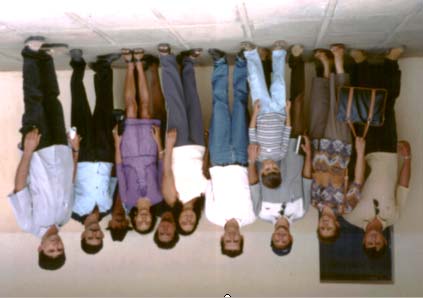
Picture 5. Council members, after election and empowerment of the
Board Directors of the CONSU-Pontal
xxii
The Users' Council was constituted in the 18th of August of 2002, in the Community of Jatobá da
Comprida, in the Municipality of Petrolina, with the name of Perennation System of the Icozeiro,
Simão and Pontal Creeks and of the Water Main (CONSU-Pontal).
It was defined, by the time of its creation, that the Council shall be the interlocutor at
CODEVASF, representing the associated entities in the negotiations regarding the supply and the
sharing of costs of the water released by the Nilo Coelho Irrigation District, to make the
perennation possible.
6.4 OBSERVED
IMPACTS
The insufficiency of water in the Pontal area and the possibility to obtain water from the Maria
Tereza Project, under implementation, are the focus of the attention of the CONSU-Pontal.
During the meetings for structuring the Council, alternatives were evaluated, in search of
solutions. In view of , specially the acquisition of water through the Pontal System. Given this
manifested interest CODEVASF promised to make new studies to assess the possible discharges.
Additionally, it informed of the possibility to operate five water intakes, 2 of which had already
been temporarily operated, in the Maria Tereza Project.
The water intakes will be operated by CODEVASF, while the CONSU-Pontal will be responsible
for the operation and control of the system of dams, whose water level will be maintained in the
minimum operational level, to reduce evaporation losses. The administration of the dams by the
CONSU, which will be also responsible of the shared allocation and for the tariff collection, will
lower significantly the cost of the activities.
Notice that communication between local farmers and CODEVASF has been far more efficient
since the creation of the CONSU, and tends to be strengthened after its formalization.
7. CONCLUSIONS
7.1 MANAGEMENT BASICS AND INSTRUMENTS
Water management is based on the conviction that water is an environmental resource,
indispensable to the life of people and to nature, which might be administered in a participative
way, by the public powers and by citizens, as an asset to be preserved. Thus, the following
concepts are fundamental:
·
Water resources management is part of sustainable development. Even when dealing with
localized basins management, it is important to remember that allocation of funds towards
this objective seeks improving quality of life, reducing social differences and preserving the
environment.
·
A new guideline for development, based on social justice, economic efficiency and ecologic
prudence parameters, requires great organization and negotiation efforts among the social
actors. It demands political and institutional conditions involving a change in behavior of
the Public Powers and the strengthening of the social organizations.
xxiii
·
The integrated management of the water resources views the multipurpose, rational and
democratic use of the water, to satisfy all users while, preserving the nature.
·
Social participation is the most effective way for selecting the best route for conservation of
the natural resources and assuring its rational and democratic use. For this to happen, the
social actors and the agents of the Public Powers must be conscious of the need for changes
and aware\of each one's role.
·
Among the challenges concerning the participative management of the water, two deserve
mention. The first one is related to the identification of strategies of intervention viewing
the use and preservation of the resource. The second refers to establishing compromises
among political agents and social actors, to define co-responsibilities over the tasks to be
carried out. To overcome them, it is necessary to promote the following:
· Institutional strengthening of the community organizations and the capacitation/
instrumentation of the social actors (water users), to deal with the holistic aspects and
with the shared management of the resource;
· motivation for building a social pact foe defending the natural resources;
· planning for the proper use of the public investments; and
· negotiation aiming at the solution of conflicts in the use of water.
·
The participation of the society viewing the shared management of the water resources
assumes an ample mobilization process, focused on consciousness of the importance of the
water and the commitment with its proper administration. This process, initiated by the
public sector and supported by a pedagogic proposal, aims at the creation of values, habits
and attitudes favoring the sustainable development, as a common objective of the society.
·
The women also play an important role in the collection and protection of the water for
domestic purposes, as well as in the education of children and youth, thus contributing for
the awareness of the need to care for nature's resources.
·
The participative and decentralized management of the water resources occurs when the
decisions taken in collegiate instances are adequate to the local particularities and forms of
political and associative organizations.
·
Articulation among the agencies and instances which constitute the Integrated Water
Resources Management System is fundamental for synchronizing issues related to the
administration of resources whose responsibility is constitutionally imputed to the
Municipalities. Among those are the basic sanitation systems and control of soil use.
7.2 EXPERIENCES IN USERS' ORGANIZATIONS IN MICRO-BASIN THE USERS'
COUNCILS
The Users' Councils are civil societies of private rights, with area de action limited to the area of
influence of the reservoirs built by the Government, for urban supply and agricultural activities.
They have a collegiate instance nature, as they include representatives of the Public Powers and
of the diverse local associations with interest in the maintenance and operation of the reservoirs
around which they are organized.
xxiv
Monitoring the implementation of the Users' Councils at the Jazigo Reservoir and at Pontal
Creek, made clear that the practice of councils makes possible exercising the participative
management. From those experiences, it is worth emphasizing the following aspects:
· The education process, aimed at the cooperation among users, is most effective when real
problems in the community are used as a starting point for social mobilization. Among those,
the need to recover and preserve the reservoirs and the urgency in defining criteria to assure
the access to the water in case of scarcity.
· The experience showed the efficacy of the Councils in the solution of conflicts in the use of
water.
· The willingness to improve reservoir operation and to correct technical problems, the
negotiation to meet the demands and the solution of conflicts strengthens the associations, the
cooperation and the search for effective management instruments.
· The councils, being dynamic organisms close to the population, have a potential to operate
with greater efficiency in the identification and treatment of local issues concerning the water
resources.
· The water conflicts are, in great part, boosted by the users' lack of information about the
operational capacity of the reservoirs and about the rational use of the water. The negotiated
allocation of the water for the many users is most efficient when the users have consistent
information.
· It became evident, during cadastration, that farmers in the area need information on soil and
water management, on irrigation techniques and on adequate crops. Additionally, they must
be aware of the risks resulting from the use of chemicals and agrotoxics.
· It is necessary that the users establish a relationship of trust and partnership with public entity
in charge of the water resources, to obtain reliable information and to feel motivated to
participate in the Council representing them. The process of creation of the two Councils
object of this Activity has already presented advances in this direction.
8. RECOMMENDATIONS
The recommendations of the Activity are divided into three groups. The first group regards the
installation and strengthening of the Councils. The second presents the basis for the strengthening
of participative management of the waters, in Pernambuco. The third approaches the support to
the Councils, viewing their consolidation.
8.1 INSTALLATION AND STRENGTHENING OF USERS' COUNCILS
With respect to the recommendations of the Water Resources Policy, for the adoption of basins as
planning and management spatial units, it must be taken into consideration, specially for small
communities, that:
·
The concepts used in planning documents and in technical studies of the water resources
still are in a difficult level for being understood by the majority of users;
xxv
·
The basin are not yet a spatial and cultural reference, because people insist in organizing
their political and social relations coinciding with the political-administrative divisions of
the territories they live in;
·
It constitutes an innovation to put together in a same forum people from different economic
classes and with different degrees in educational degrees, to discuss common objectives.
In order to overcome those challenges, one of the proposed strategies is to start the mobilization
process for the water management, using as a starting point a supply included in the routine
activities of the involved. With this purpose, a technical and pedagogical action focusing the
potentialities and difficulties in an improved management will allow the following:
·
Mobilization of the local social agents to define a field of common interest;
·
Assessing the local capacities to establish objectives and goals related to use and
preservation of the water;
·
Integration of local social organizations so that they will contribute to the social
mobilization proposal;
·
Contributing to the qualification of local technical teams, capable to offer managerial and
technical support to the users' organizations and to the administration of the reservoirs;
·
Qualification of groups of users viewing the formation of multiplying agents;
·
Contributing to the understanding of the interdependence relationship among the reservoir,
the micro-basin and the watershed.
It is important that the mobilization process be started from the understanding of the local reality,
to propose a change of points of view and of the values guiding the social actors' behavior. In this
sense, were opportune the following steps:
·
Identification of social actors and multiplying agents;
·
Spreading the mobilization proposal among the governmental institutions; leaders and heads
of associations, local technical institutions and the public in general;
·
Forming a commission of representatives of public institutions and social organizations
operating in the area, to carry out the process, thus assuring the representability and the
sharing of responsibilities among the actors;
·
Institution the Users' Council;
·
Identification and search for partnerships, viewing the gathering of technical and financial
resources for implementing projects and assuring the sustainability of the organization.
The sustainability of the Users' Councils, after their installation, will have greater chances of
being achieved if their implementation is followed by:
·
Implementation of capacitation programs in the operation of reservoirs (or behavior of the
involvement of all segments of the collegiate instance to be created;
·
Definition of participation mechanisms and criteria that will assure the representability and
basin), on the administration of associations and on participative work;
·
Support regarding the creation of an executive secretary for the Council, with provision of
funds to guarantee its operation; and
xxvi
·
Participative elaboration of annual operational plans, with definition of adequate goals and
objectives that can be reached in accordance with established schedules.
8.2 BASE FOR THE PARTICIPATIVE WATER MANAGEMENT SYSTEM IN
PERNAMBUCO
The Pernambucan water resources law state that the collegiate instances of the Integrated Water
Resources Management System reserve, in their composition, a predominant number of seats for
representatives of the Public Powers and a smaller space for other segments of the society.
Therefore, it is recommended:
·
a reflection about the legal institutionalization aspects of the Integrated Water Resources
Management System in the State, under the light of the National Law, in order to contribute
to its improvement, specially with respect to the collegiate instances and to assure seats\for
organizations of the society in these forums;
·
the formation of a workgroup to study the legislation and propose adjustments, to put in
tune with the National Policy, to guarantee the consistency and coherence of their
instruments.
With respect to the management instruments, in what concerns their applicability in participative
management experiences, it is recommended:
·
Promoting investments viewing the maintenance of the Water Resources Information
System, making it more operational and accessible to those interested;
·
Redefining the status of the Department of Education on the Rational Use of Water, in
which the Social Mobilization Division is inserted, in order to allow a greater integration
with the sectors of the organizational structure and of the Water Resources Secretary;
·
Preparing an operational plan compatible with the social objectives and the Government's
priorities, defining criteria, goals and funds for the creation of new basin committees and
users' councils, in addition to the strengthening of the existing ones;
·
Providing institutional and technical resources to support the structuring of the committees
and councils, until they reach autonomy and sustainability;
·
Designing a monitoring and accompanying system, for the activities regarding the formation
and performance of users' councils and committees. It must include indicators that allow the
evaluation and proposal of adjustments in the methodology and in the social mobilization
process, besides serving as a support to the collegiate instances;
·
Adopting the practice of cadastration of the implemented activities, to permit the formation
of an institutional record, to serve as basis for planning new activities. It would also
contribute to the systemic evaluation and progressive improvement of the experiences under
way.
xxvii
8.3 CONSOLIDATION AND STRENGTHENING OF THE CONSU-Jazigo AND
CONSU-Pontal
The Councils formed with the support of the GEF São Francisco Project contributed to the
appearance of new groups, willing to carry on the job of caring for the water in their micro-
basins, extending this interest to their respective watersheds.
However, in order for them to operate with greater efficacy, it is recommended to strengthen their
institutions. This way, they will not just represent a discussion forum but will act as a
participation and social control instance, in issues regarding the life of the citizens. For this, it is
critical the allocation of institutional, technical and financial resources.
For the strengthening of the CONSU-Jazigo, the following activities (with details and estimated
costs presented in Chart 3) were considered as priorities:
·
Expanding the social mobilization process, through social communication strategies, to the
communities in the area of influence of the reservoir;
·
Create a capacitation program in environmental education and water resources management;
·
Complementing and updating the database, including the users' cadastration, in a systematic
way, making the information accessible to the users, to help in the understanding of the
water reality and in the negotiation for its use;
·
Improving the database, with the implementation of geoprocessing Technologies.
Life conditions in the Pontal Creek area present a scenario of extreme fragility, given the high
degree of poverty of the population. Strengthening the Users' Council and a firm water supply for
maintaining an irrigated agriculture will contribute to a reversal in this situation. To this
strengthening, the following activities (with details and estimated costs presented in Chart 4)
were identified:
·
Creation of an executive secretary for the Council, properly equipped to operate and
administer the Perennation System;
·
Providing technical support in the elaboration and during the implementation of the
Council's program of activities, in the first two years of operation;
·
Implementing a capacitation program in soil-water-plant management and on the control of
the Perennation System;
·
Creation of a farmer's capacitation program, covering the selection of appropriate cultures,
aiming at a boost in the productivity of small enterprises in partnership with qualified
institutions;
·
Promoting capacitation in institutional relations, viewing the formation of competences for
articulating the local production with the regional economy's production chains, including
aspects related to Access to credit;
·
Creating a management model for the operation of the diverse reservoirs and control of the
Perennation System;
xxviii
·
Forming a team, among farmers with skills in mechanical services, for operating the control
equipment of the system of dams.
The full operation of the Perennation System will require additional water conveyance works in
two reaches, for which the construction of the following structures are recommended:
·
The Syphon SF-01 in the Canal CS-111, where a water intake is located, until the Pontal
Creek, with approximately 14 km, along the Baixa dos Velhos Creek;
·
A reservoir in the water intake to Simão Creek, until the Pontal Creek, with a 15km
extension, along the margins of the Baixa da Vassoura and Simão Creeks.
Chart 5 presents the consolidated budget for the recommended activities for the CONSU-Jazigo
and CONSU-Pontal, with half-yearly disbursements, according to suggested schedule for
implementation of the activities.
xxix
Chart 3. Consolidated budget for the recommended activities for the CONSU-Jazigo.
Custo Estimado
Atividades
Trimestres
Total em US$
1
2
3
Programa de comunicação social e capacitação para fortalecimento da
gestão participativa
Pesquisa de campo, produção de textos e layout de material de
divulgação e apoio didático (cartilhas, folders e cartazes)
Realização de eventos de capacitação para a gestão de recursos
hídricos
17.500
7.500
25.000
Estruturação de secretaria executiva:
6.763
5.000
11.763
xxx
Atualização e complementação do cadastro de usuários do açude Jazigo
Pesquisa de campo para complementação do cadastro
Atualização do banco de dados
15.000
15.000
Implementação do sistema de informações geográficas e análise da
organização dos espaços do açude Jazigo
Aperfeiçoamento do sistema de informações geográficas
Capacitação de usuários para utilização do banco de dados
32000
14000
29000
75.000
Desembolsos previstos por período
71.263
26.500
29.000
126.763
Chart 4. Consolidated budget for the recommended activities for the CONSU-Pontal.
Custo Estimado
Total
Atividades
Trimestres
em US$
1
2
3
4
5
6
7
8
Estruturação de secretaria executiva
6.763
5.000
11.763
Assessoria técnica para fortalecimento do
CONSU
30.923
30.918
30.918
30.918
30.918
30.918
30.918
30.918
247.349
Programa de capacitação para usuários:
caprinocultura
7.470
7.470
7.470
22.410
irrigação
7.487
7.487
7.487
7.487
29.948
administração de empreendimentos rurais
14.749
14.749
29.498
comercialização
7.469
7.469
7.469
22.407
xxxi
gestão e plano de negócios
7.487
7.487
7.487
7.487
29.948
relação institucional
3.640
3.640
3.640
10.920
educação ambiental
2.677
2.677
2.677
2.677
10.708
Controle e operação do sistema de
perenização
4.000
4.000
Elaboração de modelo de gestão do sistema
4.000
4.000
Projeto básico para as obras
complementares de adução
20.000
20.000
13.000
53.000
Implementação do sistema de informações
geográficas e análise da organização dos
espaços do sistema de perenização
15.000
15.000
15.000
45.000
Desembolsos previstos por período
55.850
76.984
83.569
91.777
69.038
42.028
55.831
45.874
520.951
xxxiii
Chart 5. Consolidated budget for the recommended activities for the CONSU-Jazigo and CONSU-Pontal.
Custo Estimado
Total em
Atividades
Trimestres
US$
1
2
3
4
5
6
7
8
Programa de comunicação social e capacitação
para fortalecimento da gestão participativa -
CONSU-JAZIGO
17.500
7.500
25.000
Atualização e complementação do cadastro de
usuários do açude Jazigo
15.000
15.000
Implementação do sistema de informações
geográficas e análise da organização dos espaços:
açude
Jazigo
32000
14000
29000
75.000
sistema de perenização do riacho Pontal
15.000
15.000
15.000
45.000
Estruturação de secretaria executiva:
CONSU-Jazigo
6.763
5.000
11.763
xxxii
CONSU-Pontal
6.763
5.000
11.763
Assessoria técnica para fortalecimento do
CONSU-Pontal
30.923 30.918 30.918 30.918 30.918 30.918 30.918 30.918 247.349
Programa de capacitação para usuários do
CONSU-Pontal:
.caprinocultura
7.470
7.470
7.470
22.410
.irrigação
7.487
7.487
7.487
7.487
29.948
.administração de empreendimentos rurais
14.749
14.749
29.498
.comercialização
7.469
7.469
7.469
22.407
.gestão e plano de negócios
7.487
7.487
7.487
7.487
29.948
.relação institucional
3.640
3.640
3.640
10.920
.educação ambiental
2.677
2.677
2.677
2.677
10.708
.controle e operação do sistema
4.000
4.000
Elaboração de modelo de gestão do sistema
4.000
4.000
Obras complementares de adução do sistema de
perenização do riacho Pontal
20.000 20.000 13.000
53.000
Desembolso por período 127.113 103.484 112.569 91.777 69.038 42.028 55.831 45.874 647.714